
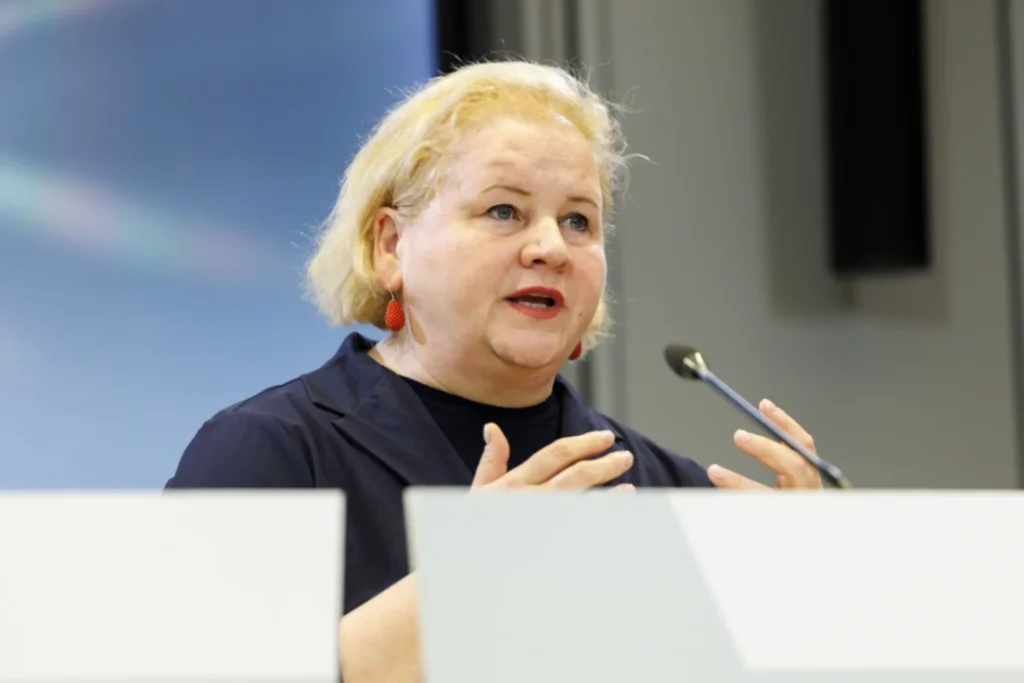
Austria’s Social Affairs Minister Korinna Schumann (SPÖ) on Friday outlined planned “offensive measures” included in the government’s proposed 2027/28 double budget, including major investments in elderly care, child poverty reduction, and support for people struggling with digital access.
Speaking on the day of the State Social Affairs Conference in Hagenberg, Upper Austria, Schumann said €100 million per year would be allocated to the care sector over the next two years. Another €20 million annually is planned for what the government calls “analog living,” while €60 million per year is earmarked for fighting poverty among children and young people.
Finance Minister Markus Marterbauer (SPÖ) had already outlined the broader “offensive measures” package in late April. The package totals €600 million across labor market programs, elderly care, and early childhood education, despite the government’s wider austerity plans.
€100 Million Planned For Care Services
According to Schumann’s office, the annual €100 million investment in care services is intended to strengthen mobile care services, described as a key pillar of Austria’s care infrastructure.
The ministry said mobile services allow people to receive medical and care support in their own homes while also easing pressure on family caregivers and reducing the need for hospital stays.
“Care begins where people live — at home,” Schumann said in a statement to the Austria Press Agency. “With these offensive funds, we are specifically strengthening mobile services and one of the most important pillars of our care system.”
The government also plans to spend €20 million annually on programs supporting “analog living.” The initiative aims to help people who cannot fully participate in digital life continue accessing services through non-digital channels.
The funding would support counseling, assistance, training, and digital support services. “Digitalization must not exclude anyone,” Schumann said.
Measures Target Child Poverty
An additional €60 million per year is planned to combat child and youth poverty. According to the ministry, the measures are intended to be low-threshold and non-discriminatory so that children facing multiple social challenges or disabilities can benefit.
The funding is expected to support services such as early intervention programs, tutoring, mentoring, transition support, free holiday childcare, and social counseling.
Schumann said fighting child poverty means “creating opportunities” and ensuring no child is left behind because of poverty or difficult living conditions.
The exact details of Austria’s 2027/28 budget are still under negotiation. Finance Minister Marterbauer is expected to present the budget on June 10.
