
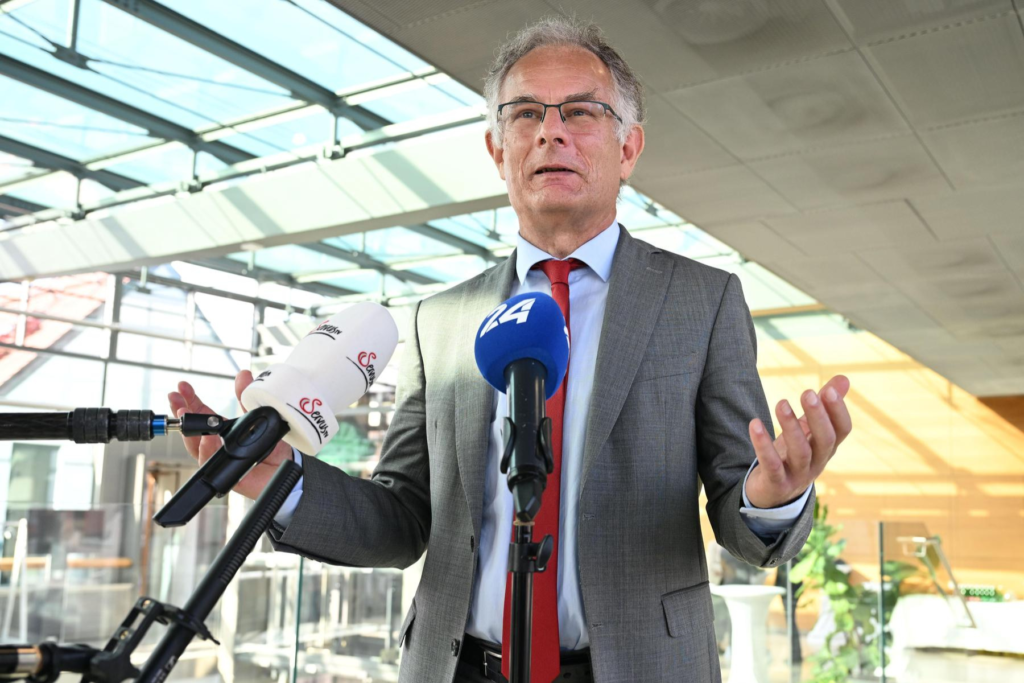
Austria’s finance minister, Markus Marterbauer (SPÖ), said the government is preparing subsidy cuts that will feed into the 2027 and 2028 budgets, while leaving open whether additional consolidation measures will be needed beyond that.
Speaking Saturday on Ö1’s Mittagsjournal, Marterbauer said a reduction in subsidies had already been agreed and that preparatory work for the 2027 and 2028 budgets was under way. He rejected the idea that the next consolidation package would necessarily reach €5 billion, a figure recently raised by Austria’s Fiscal Advisory Council, saying it appeared too high at this stage.
Marterbauer pointed to the structure of Austria’s public finances and EU fiscal commitments, arguing that part of any savings would have to be delivered by provinces and municipalities. Those levels of government would decide whether to cut spending or increase revenues, he said.
The comments come as the government aims to bring Austria’s budget deficit below 3% of GDP by 2028. The Fiscal Advisory Council warned in its annual report that the target would be missed without further measures. The council said an improvement in the budget balance of €8.9 billion would be required, and that even if the federal government implemented all measures it has announced, a remaining consolidation gap of €5.3 billion would persist. Council chair Christoph Badelt presented those figures earlier this week.
Marterbauer said the government has chosen not to finalize a 2027 budget now, citing uncertainty about the economic outlook. Employment trends would be central, he said, because stronger job growth would lift wage-tax revenues and social security contributions.
Opposition parties criticized the approach. The FPÖ’s budget spokesman, Arnold Schiefer, accused the government of delaying decisions and argued subsidy cuts should focus on asylum-related spending and publicly funded NGOs. The Greens called for reducing environmentally harmful subsidies, saying this could deliver savings while supporting climate targets and improving social fairness, including changes to company-car tax privileges.
