
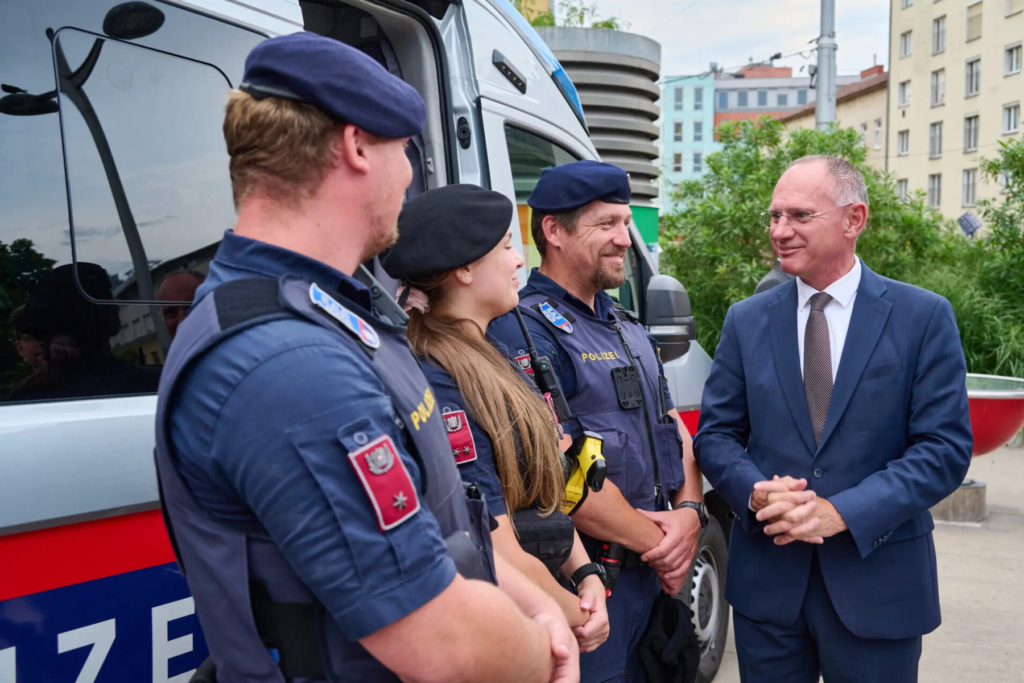
Austria is restructuring its border management. Instead of static border checkpoints, the focus will shift in the future to controls within the broader border area. The reason is the currently declining number of apprehensions, Interior Minister Gerhard Karner (ÖVP) said at a press conference on Friday. Overall, border protection is expected to become “more effective and more flexible.” As a result, the number of soldiers deployed at the border is likely to be reduced. The move drew criticism from the FPÖ and the Social Democrats in Burgenland.
Defense Minister Klaudia Tanner (ÖVP) stressed that any reduction would also be flexible and adapted to the situation. Military assistance operations will “in any case be extended,” Tanner said, adding: “We will continue to help protect the borders.” However, a smaller deployment may be sufficient in the future. “If apprehensions decline, the number of soldiers will be reduced.” This would allow released personnel to “refocus on their core tasks.” The assistance mission had always been designed as a “temporary measure,” the defense minister said. Currently, 510 soldiers are deployed in Burgenland.
NEOS Secretary General Douglas Hoyos described the move as a “historic day.” The new system would enable both “a more efficient and stronger fight against human smuggling” as well as “more freedom for the economy and shorter waiting times at borders.” State Secretary Jörg Leichtfried (SPÖ) said the new border protection model meets the criteria of humanity, rule of law, and order, and allows for a more targeted, efficient, and dynamic response to changing conditions.
Border controls extended until summer
Border controls with the Czech Republic, Slovakia, Hungary, and Slovenia will be extended for another six months, until June, Karner said. These checks will also be adapted to the new border management approach, with fewer fixed checkpoints and more mobile border-area controls.
According to Karner, border-area policing has three main pillars: protection of the EU’s external borders, advance operations in transit countries, and so-called mobile checks carried out away from the immediate border to target smugglers. Advanced technologies such as drones, helicopters, and thermal imaging cameras will also be used, with real-time situational assessments guiding operations.
The FPÖ dismissed the reform as a “PR stunt,” while the Burgenland SPÖ warned of a “sham package” that could undermine security if smuggling routes shift again.
