
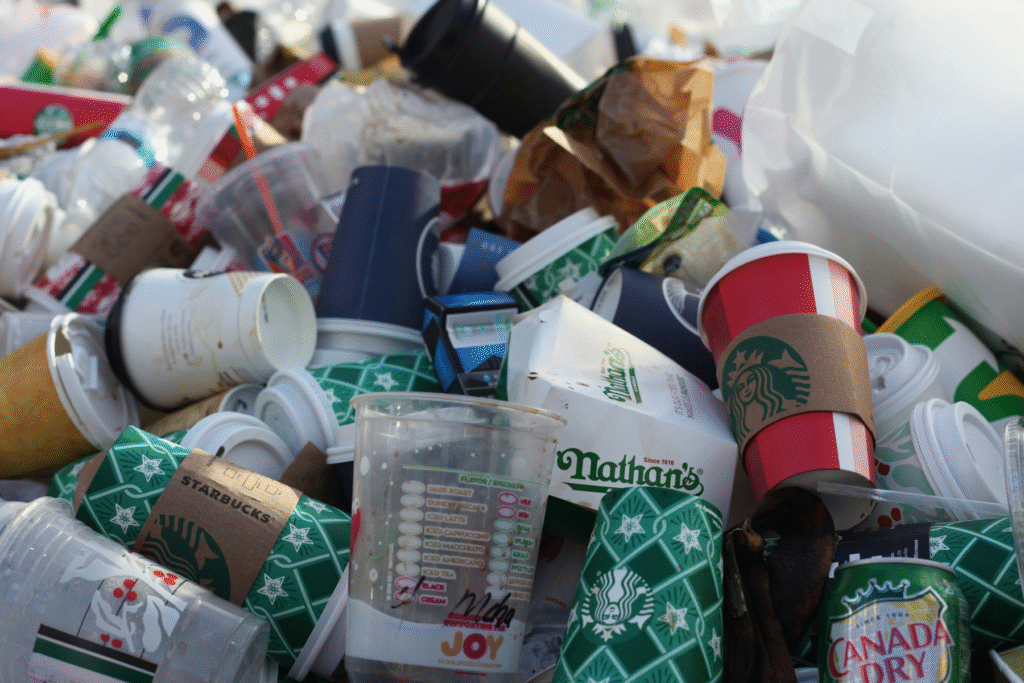
Every EU citizen generates an average of 500 kilograms of waste per year — and recycling rates remain too low. This is according to a report published Wednesday by the European Court of Auditors (ECA). Many EU countries are struggling to meet the EU’s recycling targets. Although Austrians produce an above-average 800 kilograms of waste annually, they also recycle a high proportion — 60 percent — placing Austria among the top three in the EU.
In terms of total waste generated, Austria ranks first according to Eurostat data, followed by Denmark, Luxembourg, and Belgium. The lowest waste producers, based on 2022–2023 figures used by the ECA, are Romania, Poland, and Estonia. While Slovenia, Germany, and Austria recycle the most, Greece, Malta, and Cyprus still burn or landfill most of their municipal waste.
Blok: Treat waste as a resource
The transition to a circular economy means treating waste as a resource, said Stef Blok, the ECA member responsible for the audit, at a press conference Wednesday. However, “the recycling industry in the EU is fighting for survival,” Blok warned, noting that products made from recycled plastics are often more expensive than new ones. More financial incentives at the manufacturing level and mandatory quotas for recycled plastic in new products could be part of the solution, he suggested. Encouraging people to separate waste properly also remains a major challenge, the Dutch official added.
EU law places strong emphasis on waste prevention, reuse, and recycling. However, the report found large disparities among member states in meeting these targets, with some showing little to no progress. The European Commission has also been slow to initiate infringement procedures — for instance, legal action for unfulfilled 2008 targets was only launched last year, the ECA criticized.
Lack of capacity in recycling industry
A key obstacle to achieving EU recycling goals, according to the auditors, is the limited capacity of the recycling industry. In some member states, there are only a few facilities, or they face closure — particularly in plastic recycling. Contributing factors include low demand for recycled materials and the import of cheap plastics from non-EU countries. The report stresses that the business model of recycling companies urgently needs to be reassessed.
The ECA emphasized that recycling targets can only be met if the necessary infrastructure exists and there is demand and a market for recycled products. The Commission should take measures to make the circular economy — such as materials recycling — more economically viable within the EU. Infringement procedures should also be initiated promptly to deter non-compliance and encourage progress.
Furthermore, the ECA urged the Commission to evaluate the costs, benefits, and feasibility of introducing and/or harmonizing landfill and incineration taxes across the EU. The European Commission has already announced a new legislative act on the circular economy, scheduled for adoption in 2026, which aims to address the challenges in the recycling market and the weak demand for recycled materials.
