Parliament Approves New Tax-Free Overtime Rules for 2026
Austria’s parliament approves new tax-free overtime rules for 2026, prompting debate over fairness, budget impact, and incentives for work.
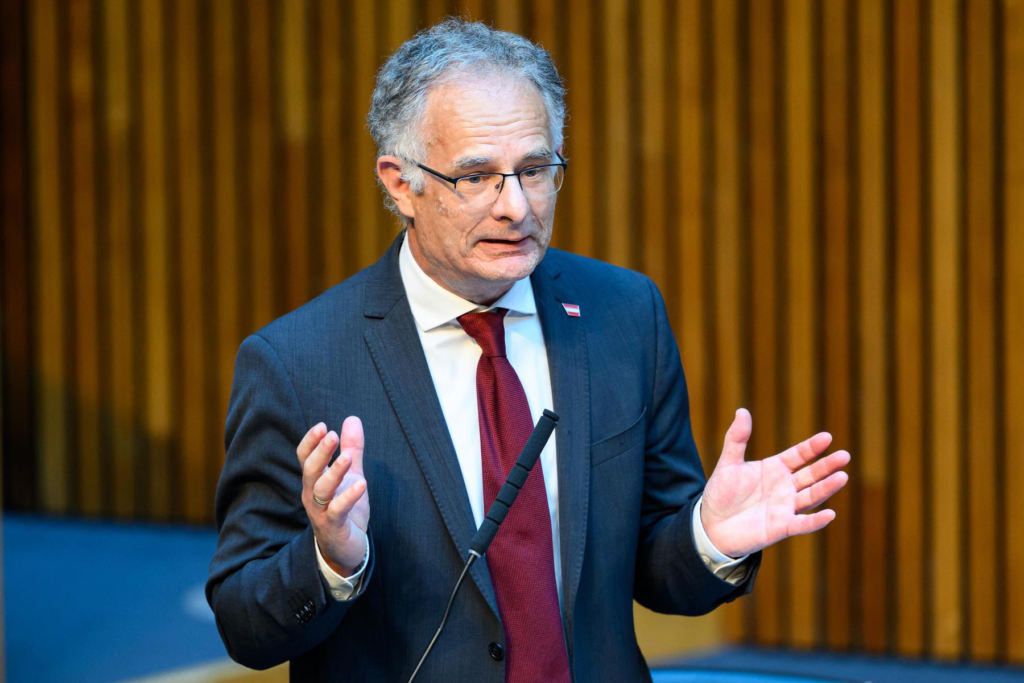
On Wednesday, Austria’s National Council passed a new overtime pay regulation for 2026 with the votes of the governing parties. This year, overtime premiums for the first 15 hours per month are tax-exempt up to a maximum of €170. The government framed the measure as an incentive for performance, while the opposition rejected it.
Originally, only premiums of up to €120 for ten overtime hours per month were to be tax-free this year—a rule that will now take effect in 2027 instead. For 2024 and 2025, the monthly tax-free ceiling for overtime premiums had been temporarily raised to €200 for up to 18 overtime hours. In the fall, Economy Minister Wolfgang Hattmannsdorfer (ÖVP) had pushed to maintain the higher allowance. Lawmakers also approved making pay for work on public holidays tax-free up to €400.
It is important to reward people who work more, said Andreas Ottenschläger (ÖVP). Despite tight budgetary conditions, incentives for performance could still be set, Markus Hofer (NEOS) emphasized.
FPÖ Sees Added Burden, Greens Criticize Lack of Balance
The Freedom Party (FPÖ) criticized the reduction of the preferential treatment from 18 to 15 overtime hours. “In a country with very high taxes, this cannot be supported,” said Alexander Petschnig, arguing that his party opposes any further burden on high performers. He also said the one-year time limit creates a lack of planning certainty. However, the FPÖ supports the tax exemption for public holiday pay.
The Greens also opposed the measure, though for different reasons. Expanding the tax exemption from ten to 15 overtime hours would cost €105 million, and 80 percent of the tax savings would benefit men, while 90 percent would go to the upper half of income earners, Markus Koza said, citing an analysis by Parliament’s budget office. The measure has nothing to do with performance or gender fairness, he argued, proposing instead that extra-hour premiums for part-time work be taxed in the same way as overtime premiums for full-time employees.
Finance Minister Markus Marterbauer (SPÖ) defended the decision. Contrary to FPÖ claims, the change does not worsen conditions but rather provides a benefit, he said. While higher-income groups may benefit more, the government’s measures should be viewed as a whole, he told the Greens. For example, the value-added tax cut on basic foodstuffs primarily benefits lower-income groups. “I am the guarantor that budget policy is fair in this respect as well,” the minister said.
“Any measure that encourages additional work is welcome,” said Martha Schultz, head of the Austrian Economic Chamber and the ÖVP’s business wing. “Many sectors continue to face skilled labor shortages despite the difficult economic situation,” she noted, adding that demographic trends are further intensifying the problem.
Get Vienna in your inbox
The stories that matter — straight from The International, every week.
No spam. Unsubscribe anytime.