
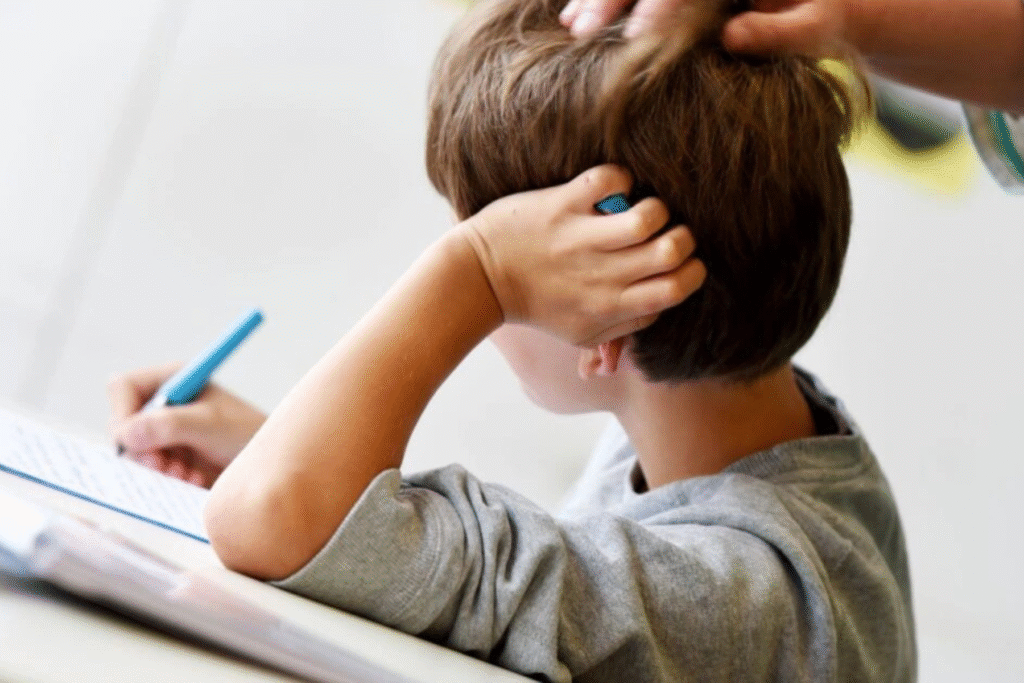
Just under two and a half weeks before the start of school, new figures collected among students as well as parents and educators are drawing attention. Above all, the children and adolescents – more than 14,000 were surveyed – stated that performance pressure is taking its toll on them. Almost half strive for perfection, according to the survey by the “Mental Health Days” initiative in 138 schools in eight federal states.
Particularly surprising was the figure that 49.7 percent of children and adolescents – 9,939 responses were valid – want to be perfect. The initiator of the “Mental Health Days,” Golli Marboe, asked himself at the presentation of the figures on Thursday whether perfectionism is “poison for the psyche.” “Being the best is not sustainable in the long run,” said Barbara Haid, president of the Austrian Federal Association for Psychotherapy (ÖBVP). “Because through this striving to be very good, to be perfect, we humans stabilize our self-worth.” But then other people come into play, and one tries to appear just as perfect in their eyes. “Always being the first, that doesn’t work out,” said Haid. “We find ourselves in a vicious circle. Because perfectionism is not attainable for us humans.” One must also learn to deal with defeats.
What puts the most pressure on children and adolescents is, with 6,163 mentions, school. Grades were mentioned 551 times. Surprisingly high was also the mention of guardians as a source of pressure (1,174 times). “Very few parents do this with bad intentions,” said Haid. Most parents care about their children being able to grow up well and healthy. “And they often worry that if they do not perform well in school, they simply will not have a good life in the medium term.” Parents would also unconsciously project unfulfilled wishes, longings, and career opportunities onto their children. That is why raising awareness is so important, said the ÖBVP president.
Increasing performance pressure
Teachers also see the increasing performance pressure among their students and named this problem 727 times out of 2,514 valid responses. Bullying was mentioned 444 times. However, cell phone addiction is seen as much more problematic (1,023 mentions). “I do not find it surprising. It is important to look at this issue very closely,” said Minister of Education Christoph Wiederkehr (NEOS). “Cell phone addiction must be taken just as seriously as alcohol addiction or nicotine addiction. But for a long time, it was neither recognized nor socially acknowledged.” For this reason, a cell phone–free zone has been introduced in the school sector. Cell phone addiction is also connected with performance pressure through social media and bullying, Wiederkehr said. Parents, by the way, also listed these three issues among their top three. “We must create awareness (…) and enable a healthy use of the cell phone and digital media, because they also offer great added value,” said the Minister of Education.
The “Mental Health Days” are an Austria-wide prevention program to promote mental health. Since its start in 2022, the action days have taken place in more than 200 schools, and in the meantime 150,000 young people in eight federal states have been reached. The project is supported by a scientific advisory board and a newly founded youth advisory board. Julia Miklas, a member of the new youth advisory board, would have wished for more mental support during her apprenticeship. When a fellow student had died, a school psychologist first had to travel to support the young people. For this reason, the nearly 190 positions are now being increased. Because, according to Wiederkehr, one psychologist has to take care of 6,000 students. In the course of the coming school year, 70 positions will be added, and in 2026/27 another 70.
In addition to more staff in school psychology and school social work, the expansion of prevention programs is planned, as well as mandatory “exit interviews” when a child or adolescent is at risk of dropping out of school.
The vision of the “Mental Health Days” is to have reached all roughly 2,500 lower and upper secondary schools in Austria by the year 2030. For this full expansion, around eight million euros are needed annually, appealed initiator Golli Marboe.
