Vienna Plans Closed Group Homes for Repeat Offenders Under 14
Vienna plans a pilot project for closed housing of criminally underage repeat offenders, focusing on education, child welfare, and safety.
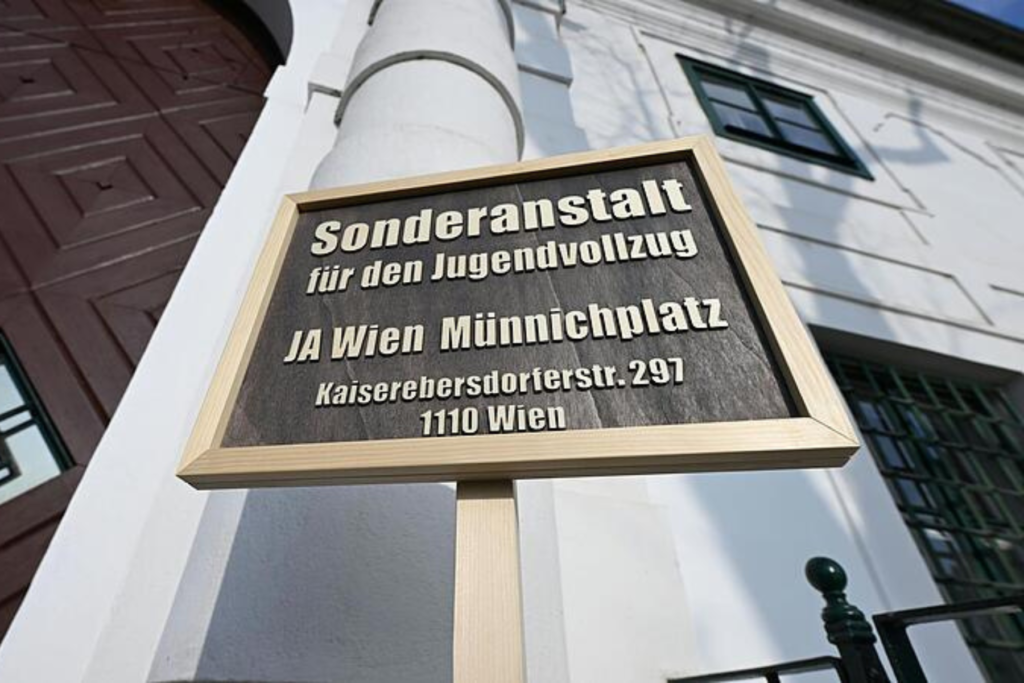
Vienna plans to launch a pilot project this spring involving the closed accommodation of criminally underage repeat offenders. As the City of Vienna’s Department for Child and Youth Welfare (MA 11) confirmed, a concept is currently being developed in more detail, with key parameters already defined. Under the plan, criminally underage youths deemed to pose a high risk to themselves or others could be placed in a so-called “time-out group home” for up to six weeks.
According to the City of Vienna, the legal basis for this measure is intended to be the Residential Care Act. The specific criteria under which such detention can legally take place still need to be defined, MA 11 said. The project is still in the development phase, but its launch is planned for no later than early April.
Initially Two Places in a Group Home
In practice, the plan provides for immediate placement following serious offenses committed by children under the age of 14. From that point on, the residents’ advocacy body will review the case. “If it is decided there that the detention is not justified, the case goes to the district court. We then have to lift the restriction of liberty and place the young person in a lower-threshold facility,” said MA 11 spokesperson Ingrid Pöschmann.
Initially, two places are planned in the group home. Pöschmann described the initiative as a “model project,” noting that research shows small settings are significantly more effective. A nationwide regulation is still pending.
The Ministry of Justice said it remains unclear whether the Residential Care Act—under which restrictions on liberty are only permissible if the person concerned is mentally ill or cognitively impaired—will be amended or whether another solution will be found. The City of Vienna’s pilot project is, however, being supported by legal experts. At the same time, a working group at the ministry is examining new approaches to dealing with criminally underage repeat offenders, aiming for a practical solution that ensures both child protection and child welfare.
Focus on Education, Not Surveillance
A location for the facility has already been selected, where parents or relatives will also be able to visit. The MA 11 spokesperson emphasized that the facility will have a strong educational focus. As a result, it will not be guarded by security personnel, nor will surveillance cameras be used.
The project will be run by a partner organization. Staff will be recruited exclusively from experienced practitioners with backgrounds in education, psychology, psychotherapy, or related fields. Personnel will be present around the clock to ensure compliance with the rules. During the initial phase of placement, leaving the group home will only be permitted for medical or official appointments, accompanied by caregivers. Dangerous objects will be prohibited. Violations may result in sanctions in the form of educational measures. Whether residents will be allowed to keep mobile phones has not yet been finally decided.
Gradual Easing of Restrictions
If progress is positive, gradual outings are planned. “The goal is to keep the children in placement for as short a time as possible and then move toward easing restrictions,” Pöschmann said. Cooperation from the children and adolescents is essential. “But for the first time, we can also lock the door of the group home,” she added. “This gives us the opportunity to repeatedly reengage with the children and build trust.”
The cost of the “time-out group home” has not yet been determined. According to MA 11, expenses cannot yet be reliably estimated.
Get Vienna in your inbox
The stories that matter — straight from The International, every week.
No spam. Unsubscribe anytime.