
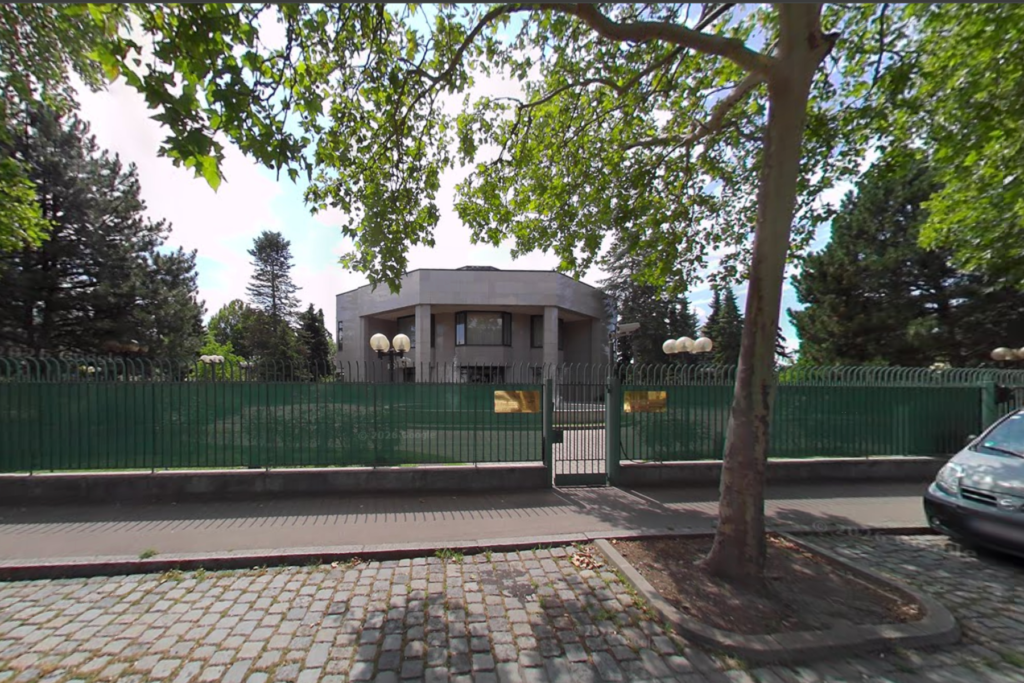
Several satellite installations located on buildings belonging to Russia’s diplomatic representation in Vienna have been removed in what Austrian officials described as a move against Russian espionage activities.
According to ORF Radio, three out of roughly 20 satellite systems were dismantled from the roof of Russia’s mission to international organizations in Vienna’s Donaustadt district. Austria’s Foreign Ministry confirmed the removal of the three installations to the Austria Press Agency (APA). Foreign Minister Beate Meinl-Reisinger said Monday in Brussels that the “forest of antennas” had been reduced and that Austria had demanded “full clarification from Russia regarding this forest of antennas.”
Earlier in May, Austria expelled three Russian diplomats who were allegedly directly involved in satellite espionage activities in Vienna. According to media reports, satellite systems located on the grounds of the Russian Embassy in Vienna’s Landstraße district and at a Russian diplomatic housing complex in Donaustadt were allegedly used to collect data from international organizations.
Austria’s Justice Ministry has also drafted legislation that would make espionage against EU institutions and international organizations a criminal offense. Recruiting spies, or agreeing to be recruited, would also become punishable under the proposed law.
Expert Calls Move A “Symbolic Success”
Intelligence expert Thomas Riegler of the Austrian Center for Intelligence, Propaganda and Security Studies in Graz described the removal of the installations and the expulsion of diplomats as a “symbolic” but clear “success for the foreign minister” in comments to Ö1 radio.
Riegler noted that Vienna remains strategically important for Russia because it hosts one of Moscow’s largest embassies worldwide. He added that even stricter espionage laws would not affect embassy staff with diplomatic immunity, who would remain protected from prosecution.
“I believe this should primarily be understood as a message that Austria is increasingly insisting on red lines and will no longer tolerate everything that may have been accepted in the past,” Riegler said. At the same time, he warned against expecting major powers such as Russia—or other countries—to stop conducting espionage activities in Vienna because of tougher Austrian laws.
He added that Vienna would remain “a center of espionage activity” due to the presence of international organizations, regardless of legislative changes.
