
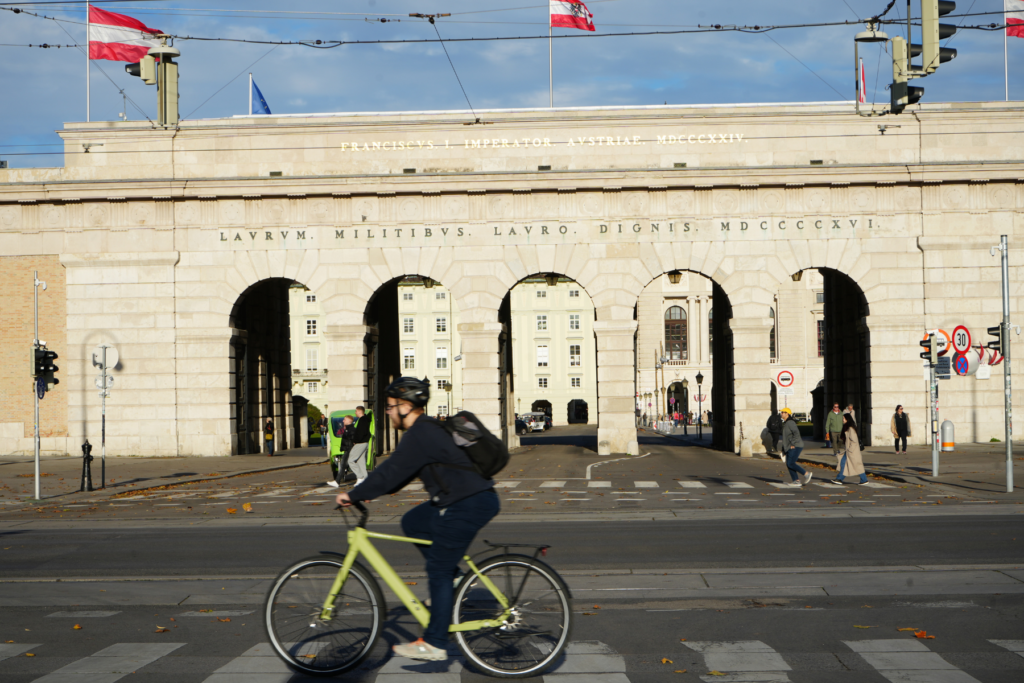
Austria’s population continued to grow in 2025, but at a slower pace than in previous years, while the share of foreign citizens reached a new high, according to preliminary figures published by Statistics Austria. At the start of 2026, around 9.22 million people were living in the country, an increase of about 21,900 residents, or 0.2 percent, compared with a year earlier.
Foreign citizens accounted for roughly 1.89 million people, or 20.5 percent of the total population, up slightly from 20.2 percent at the beginning of 2025. The rise confirms a long-term trend in which population growth in Austria is driven primarily by migration rather than natural increase.
Vienna stood out for both population growth and its concentration of foreign residents. The capital added nearly 13,750 people in 2025, accounting for almost two-thirds of Austria’s total population increase. By January 2026, Vienna’s population reached just over 2.04 million. More than 754,000 residents of the city were foreign citizens, meaning that about 37 percent of Vienna’s population did not hold Austrian citizenship—the highest share of any federal province.
Outside the capital, the proportion of foreign citizens was markedly lower but still above the national average in several western regions. Salzburg and Vorarlberg each recorded shares just above 21 percent, reflecting their strong labor markets and cross-border mobility. Tyrol followed with around 19 percent. By contrast, eastern and southern provinces such as Burgenland, Lower Austria, and Carinthia reported the lowest shares, ranging from roughly 12 to 14 percent.
Overall population growth varied widely across the country. Vienna recorded the strongest increase, at about 0.7 percent, while most other provinces grew by less than the national average. Burgenland was the only state to register a slight population decline in 2025. Statistics Austria noted that the pace of national population growth has steadily slowed since peaking in 2022, when the population expanded by 1.4 percent, before easing to 0.6 percent in 2023, 0.4 percent in 2024, and 0.2 percent last year.
The figures are preliminary and based on central residence registration data. Final population statistics, including a detailed breakdown of migration and natural change, are expected in mid-2026.
