
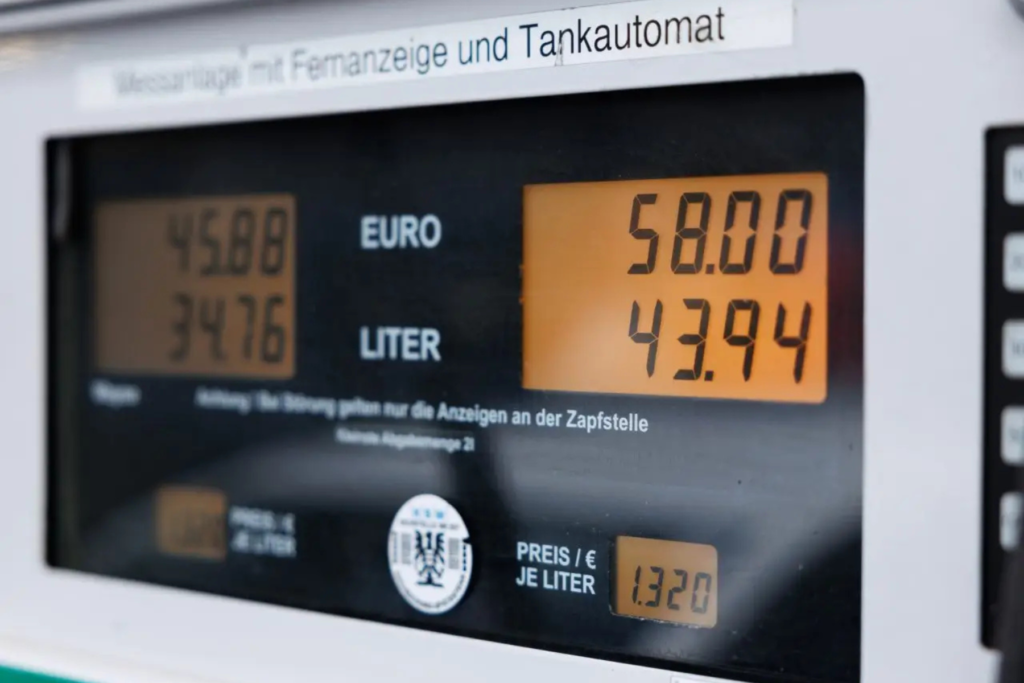
New rules for gasoline and diesel prices take effect today, bringing changes for drivers as the government extends parts of its fuel price relief measures. The existing fuel price cap remains in place, but in a different form. Just before the previous measures were due to expire, the federal government agreed to extend support for motorists.
Fuel Price Relief Program Revised
While the previous cap on gas station profit margins expired at the end of May, the reduction in the mineral oil tax (MÖSt) will continue. Beginning in June, the tax on gasoline and diesel will be reduced by 1.7 euro cents per liter. The measure will initially remain in effect through the end of June and will then be reviewed monthly. An extension through the end of August remains possible.
The government is also introducing a so-called “price reduction guarantee.” Under the new system, falling wholesale fuel prices are intended to be passed on to consumers more quickly. The mechanism will be based on international fuel price benchmarks. If wholesale purchase prices decline, prices at gas pumps must also be reduced accordingly.
Margin Cap Ends, Drawing Mixed Reactions
The government will not extend the previous limit on profit margins for gas station operators. According to the report, the measure had recently lowered fuel prices by around 2.5 euro cents per liter.
The issue had become a source of disagreement within the governing coalition. While the Social Democratic Party of Austria supported extending the measure, the Austrian People’s Party and NEOS favored ending the intervention. The Austrian Federal Economic Chamber welcomed the end of the margin cap, calling it an important step for competition and supply security.
Criticism came from the Freedom Party of Austria, the The Greens – The Green Alternative, and environmental organizations. The FPÖ argued that the relief measures do not go far enough, while the Greens criticized the removal of the margin cap. Meanwhile, World Wide Fund for Nature warned that the changes could increase dependence on fossil fuels.
Fuel prices currently remain well below the peaks recorded in March. According to E-Control, a liter of diesel recently cost around €1.84, while regular gasoline was priced at about €1.76 per liter. For comparison, diesel prices temporarily reached around €2.20 per liter in March, while gasoline climbed to approximately €1.90 per liter.
